On Dignity

Dignity, it seems, is one of those words that eludes written or verbal explanation. It must be felt, and I now understand it is only truly felt when it’s been taken away. While this is certainly a self-evident truth, it’s a privilege to not fully grasp that until now.
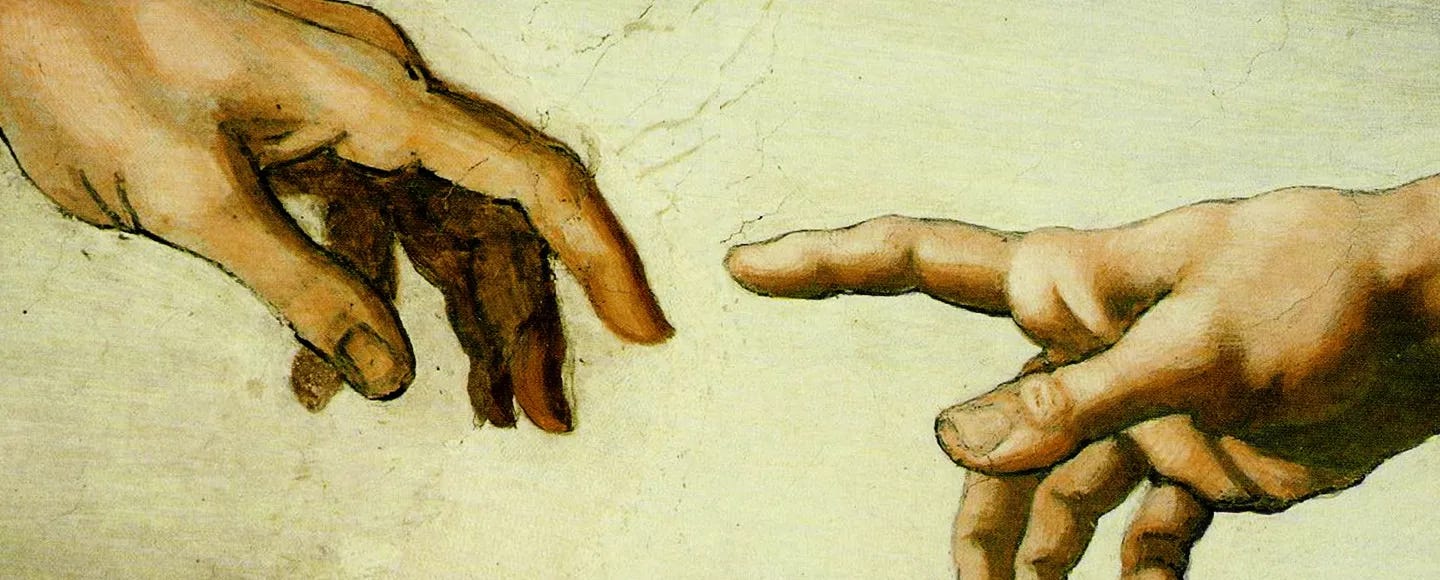
.
My mother had a fall. At 96, a fall is more than a fall. It’s a symptom of the acceleration of decline. While no bones were broken, the fall temporarily reduced her to a new level of dependency for her most basic needs. A lady’s modesty evaporated in an instant, no permission asked. It has been brutal to witness. It may have broken her spirit. I am hopeful it has not, but either way, I have learned a lot through this experience.
When a spirit is broken, I suspect the loss of dignity can be found nearby. This is why dignity to all is the foundation of the Universal Declaration of Humans Rights, and a pillar of all the world’s religious beliefs. The taking of dignity, intentionally or not, is therefore an act of violence. Not physical violence, but worse: violence to the soul. We don’t have effective laws for that. Not even the necessary norms.
In my work on regeneration—the process that explains how all life works—we focus on learning to see humanity and the systems we create as a part of nature, not apart from nature. And yet, human beings are certainly unique among the chorus of life. At first, it would seem that we have both a higher level of intelligence, as well as a more evolved or higher level of consciousness. Higher than say a bird, or a tree. Advanced intelligence and higher consciousness seem, on the surface, to go together. Maybe. Maybe not. One can argue both positions.
But regardless, it seems to me that my theory of regenerative economics must address the question of the uniqueness of human beings within the larger community of life. As an integral theory, regenerative economics must therefore integrate what we know about human psychology and consciousness just as neoclassical economics has attempted to integrate psychology and economics with what’s called “behavioral economics.” Five Nobel prizes for explaining that humans are not simply profit maximizing particles in a machine!
Here’s my working hypothesis: Conventional economics is grounded in the reductionist logic of the machine that Newton taught us, the logic of a “clockwork universe.” This part is fact. Same story for Taylorism, the foundation of modern management theory. Even the rise of “purpose” within management practice can be seen as a means to control. The machine logic implies we are in control, we can optimize for our own ends. This naïve desire to control and optimize, as I have written, is rooted in the myth of separation, the idea that we are separate from one another, and from Earth, our home. And, that we are somehow superior, as if the sun is superior to the moon. In truth, if you remove either, or if they are not in right relationship, life ends on this planet. A belief in superiority rather than complementarity is what leads to the trampling of dignity. We see this violence playing out in the daily news in the United States.
Even if we humans were “superior,” whatever that actually means, it does not imply the right—or even the possibility—to control. The ability to control is how complicated machines work, but not how the complexity of life works. Worse, the attempt to control is not only a fool’s errand, its consequences include the destruction of human dignity. They can break the human spirit. Therefore, the consequences of the desire for control are violent. Violence that often goes unseen, but not unfelt. Violence we cannot measure. Nevertheless, the attempt to control is a violent act. I thank Nora Bateson for this important, yet not obvious, insight.
The proof of this fatal error of a naïve attempt to control is now presenting itself as the polycrisis—cascading and interconnected economic, social, political, and ecological crises, with feedback loops creating ever more crises. All are symptoms of the underlying act of violence rooted in the naïve desire for control, based on an economics derived from the logic of the machine.
The great economist John Maynard Keynes famously said, “Practical men who believe themselves to be quite exempt from any intellectual influence, are usually the slaves of some defunct economist.” How true. Not simply the theories, but the manner of thinking. With all his brilliance, Keynes himself was trapped in the reductionist logic of the machine, and a desire to control. Recall his essential insight was to propose aggressive government spending to plug a demand gap, in order to avoid another depression and to restore the economy to an “equilibrium” condition. Turns out, it’s not that simple. There is no equilibrium (short of complete collapse). Like all living systems, the economy is not a mechanism, but a far-from-equilibrium living system.
Here’s the problem: We measure these crises within the materialist, reductionist logic of the machine. So we have climate change and biodiversity loss. We have inequality, and an affordability crisis. We have poverty and “structural unemployment”. We can put a number on all these crises. And yet, like with dignity, we fail to see them for what they are. How do we measure the cost of the loss of dignity? If I’m right about my mom, what is the cost of a broken human spirit? Is there a number, much less a monetary value to put on it? My point is simple: what matters most cannot be reduced (reductionism again) to the logic of the machine, measured and managed. So our quest for “sustainability” and “wellbeing” cannot be limited to the materialist logic of “measure what matters”. This does not imply don’t bother with metrics. It means the answer cannot be found with better metrics alone.
Let’s pull on this thread further. What if life and matter all emerges from consciousness as cosmologists Jude Currivan and Brian Swimme suggest, as my tutors of ancient wisdom traditions Mary Evelyn Tucker and Sandy Wiggins suggest, and even as the man who invented the microchip, Federico Faggin, now understands. Then, in accordance with the principle of holism—patterns repeating across scales— we can certainly break the spirit of all life, not just human life. Does a forest, or a river not have a spirit? Does a mountain? Do they too not deserve dignity at the very least? Our indigenous elders know the answer. But we cannot see it in our materialist logic, with our sustainability goals and measures, our wellbeing indicators, and our ESG metrics.
A single mom fired by a DOGE generated email for no reason and then rehired a month later because it was a mistake creates no new unemployment. In the data, nothing changed. But is she any longer the same human soul? What are the consequences of that act of violence and lost dignity?
No doubt the rise of authoritarianism around the world is a consequence—no doubt unintentional for the most part—of the same loss of dignity imposed on society by our wrong thinking—the limited reductionist thinking at the foundation of our economics that sees the economy as a machine to be controlled and optimized for our ends. There is no better example of our flawed thinking than the ideological belief in unrestrained globalization on both the left and the right in an effort to enhance the efficiency of the machine.
In 2026, I will be calling on Michael Pirson and others who have done extensive work on a “new humanism” exploring the primacy of dignity. Dignity relates directly to one of the first principles of Regenerative Economics: “empowered participation.” It’s the idea that the health of the system depends on all parts of the system to be empowered to participate in the system, contributing their unique essence to overall systemic health, while being nourished by the health of the whole at the same time. In such a system, superiority is as silly as the superiority of a brain within a human, or the sun within the living earth. Empowered participation is profoundly different from mere “inclusion,” which is measurable with statistics, a tool of machine logic. Like dignity, empowered participation is only fully understood when it has been lost and the resulting consequences despoil the health of the whole.
Another slice of the onion awaits. And we are getting down to the core, the dignity of life.
May we re-member our membership to this world. From there, integrity like that of a cell membrane, build a safe container for dignity & reverence to fuel human imagination and honor our creative responsibility. Thank you for the great insights expanding fields of regenerative thinking.
Great piece John!